

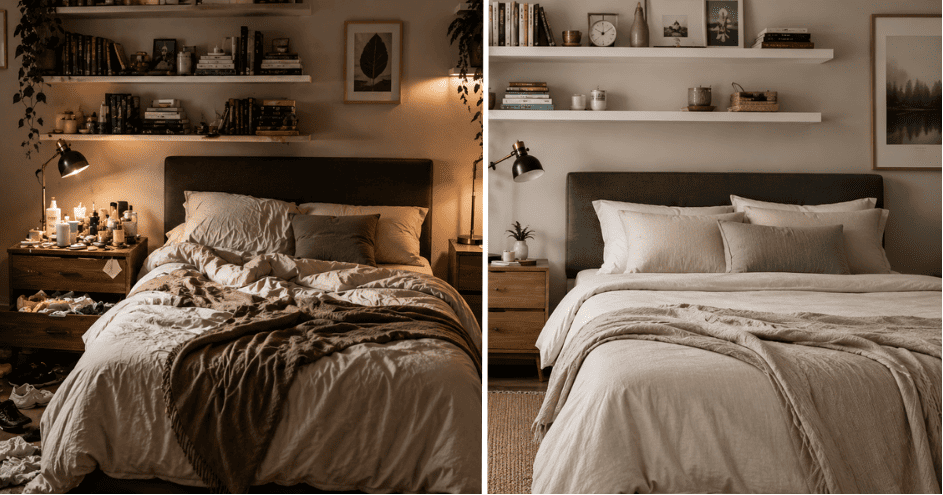
Introduction: The Hidden Storage Pitfalls of Modern Apartment Design
You can tell a lot about an apartment in the first ten seconds. Not from the sofa, not from the paint. From the wardrobe. Nine times out of ten, in an otherwise carefully done-up bedroom, there’s a bulky freestanding cupboard shoved into a corner that clearly wasn’t part of the original plan. Someone spent real money on the flooring, agonized over the lighting, then bolted on a storage unit as an afterthought.
There’s a term designers use for this, half-joking, half-serious: the luxury space illusion. One bad wardrobe choice quietly undoes everything else in the room. It sounds dramatic until you actually notice it happening in your own bedroom. Wardrobes are enormous. They’re permanent fixtures for years. So when someone picks one purely on how much it can hold, without any thought to proportion or placement, the whole room starts to feel cheap, no matter what the curtains cost.
Here’s the fix, and it’s not what most people assume. You don’t lose storage space by getting this right. You just stop buying a generic box and start planning built-in cabinetry around your room’s actual dimensions. That single shift, from standalone furniture to something integrated into the wall, is arguably the biggest change happening in Indian bedroom design right now. Worth knowing before your next renovation eats your weekend.
Fixing the Wall Space Blunder With Built-In Almirah Designs
Stop thinking of the wardrobe as an object sitting in the room. Think of it as part of the wall. Recessed framing sinks the unit into a cavity instead of letting it stick out, and in a mid-sized bedroom that alone reclaims several inches of usable floor. It also kills the gap behind the unit where socks, dust, and stray receipts go to disappear forever.
Then there’s the ceiling gap. Anyone who’s lived with a standard-height cupboard knows the useless strip of air above it, good for nothing except collecting boxes nobody remembers packing. Running the unit floor to ceiling fixes that instantly. It reads as deliberate, and gives you a spot for the stuff you touch twice a year, spare quilts, a suitcase, holiday decorations.
For doors, sliding beats hinged almost every single time. A door swinging open into your walking space is a tiny daily irritation, and tiny irritations add up over a decade of living in a room. Parallel sliding tracks keep the floor open, which matters most where the bed is already eating most of the available space.
Replacing Outdated Finishes with High-End Cupboard Concepts
Structure sorted, now the finish. This decides whether guests notice the wardrobe or just walk past it. Tinted glass fronts, lit from inside, give a cupboard the kind of boutique feel you’d expect walking into a nice store, not a bedroom. Small change. Big difference in how the whole wall reads.
Glossy laminate had its decade. Matte and fluted textures have mostly taken over now, and fluting in particular does something interesting, it catches light differently depending on where you’re standing in the room, so it reads as textured without needing loud colors.
Mixing materials pays off long-term too. Warm wood with a slim metal trim has a tactile quality laminate just can’t fake. Five years down the line it still looks like a choice, not a mistake.
Layout Mistakes That Ruin a Bedroom’s Premium Aesthetic
A well-built wardrobe placed badly still wrecks a room. Big units shoved into corners often block daylight from reaching the rest of the space, and the room shrinks visually more than most people expect. Before committing to a spot, watch how light actually moves through the room across a full day. Takes five minutes. Saves years of regret.
Color mismatch trips people up constantly, and it’s an easy mistake to avoid once you know to look for it. A cupboard finished in a shade that fights the walls pulls the eye in the wrong direction, no matter how well it’s built. Pick something close to your wall tone, or contrast on purpose as a real design choice, not by accident.
Mirrors need more thought than they get. Hung at the wrong height or angle, a mirror just reflects clutter, or an open door, or the messiest corner of the room, instead of bouncing daylight the way it should. Test the angle before installation. It matters more than it sounds like it should.
Smart Internal Setups for Maximum Daily Efficiency
Good storage still has to work on the inside, and this is where plenty of nice-looking wardrobes quietly fail. Zone by frequency, daily clothes at eye level, seasonal stuff up top, and mornings get noticeably faster. Hidden drawers for jewelry keep small valuables tucked away without needing a separate box on the dresser.
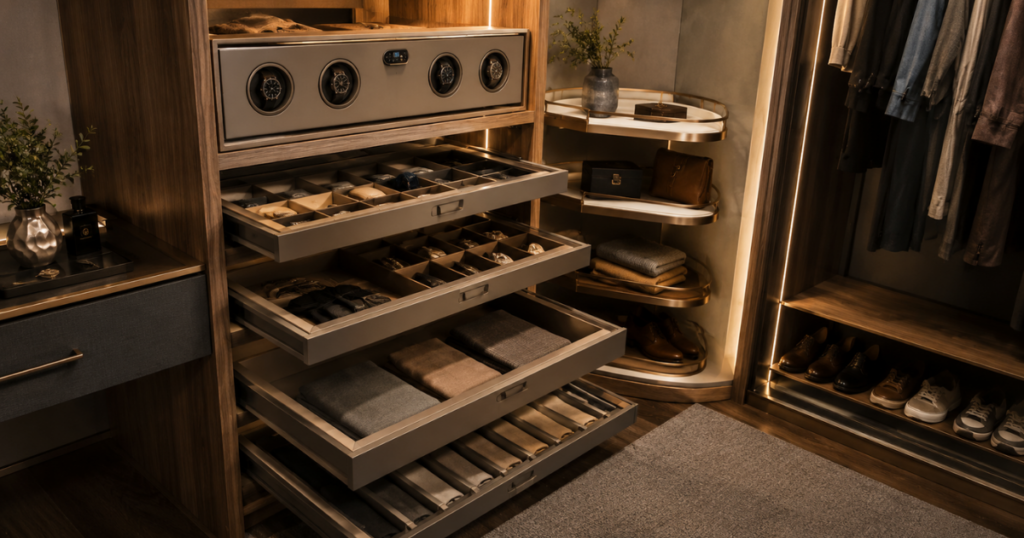
Adjustable shelving inside matters more than the brochure ever mentions. Storage needs shift over the years in ways a fixed layout simply can’t handle, and within a couple of seasons a rigid interior becomes its own small headache. Anyone weighing options that pair flexibility with a smaller footprint should look at a small wooden almirah for home built with modular internal shelving, the kind that grows with you instead of forcing another purchase two years later.
Conclusion: Investing in Seamless Architectural Harmony
Before locking anything in, walk the room one last time. Stand at the doorway and actually look, does the wardrobe block light, does the finish clash with the walls, do the proportions sit right next to the bed and windows.
Storage should support how a room feels, not fight it. A wardrobe planned properly keeps things calm while still holding everything a bedroom needs day to day. The same logic runs straight into the kitchen too. A well-thought-out wooden kitchen cupboard furniture setup is often the one thing separating a kitchen that feels chaotic by Wednesday from one that stays organized no matter how much cooking happens in it.
Built-in storage, over the years, tends to be one of the few renovation choices that actually pays for itself. Anyone touring a home notices it almost immediately, buyer or tenant, and it consistently ranks among the small details that shape a first impression of quality.
