

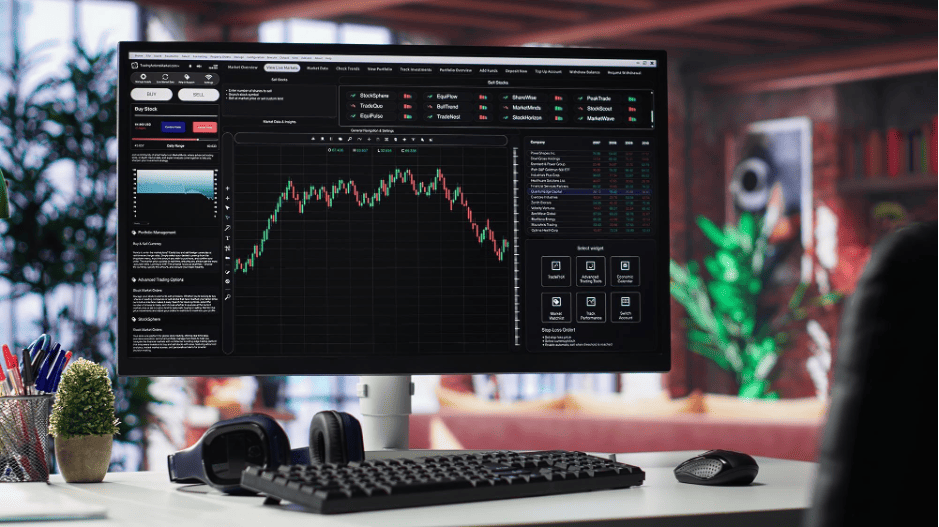
Master portfolio rebalancing during market volatility by establishing programmatic tolerance thresholds (5% to 10% drift). Utilizing a multi-asset trading platform allows seamless capital rotation across uncorrelated assets like traditional fiat and digital tokens. This beginner’s guide covers time, threshold, and cash-flow rebalancing strategies to mitigate volatility drag and capture asymmetric market gains.
Key Takeaways:
- Market swings naturally warp your targeted risk profile, shifting balanced portfolios into high-risk allocations.
- Establish strict 5% baseline thresholds to execute objective, emotion-free buy and sell orders.
- Utilizing a single interface eliminates systemic delay when shifting funds between diverse asset classes.
- Redirect incoming dividends or capital injections into beaten-down sectors to bypass immediate capital gains liabilities.
Market volatility can easily trigger an emotional response. When major indices swing wildly, central banks adjust interest rates, and digital asset markets undergo rapid corrections, the natural human instinct is either panic-selling or freezing up entirely.
However, seasonal market participants view intense fluctuations through a different lens: an asset rebalancing opportunity.
Portfolio rebalancing is the systematic process of buying and selling portions of your investment mix to maintain your original, targeted level of risk. When left unattended during massive market swings, a beautifully planned, conservative portfolio can transform into an aggressive, unhedged liability.
This guide breaks down the structural mechanics of rebalancing and explains how to turn macroeconomic turbulence into a systemic advantage.
The Cost of Inaction: Understanding “Volatility Drag”
To evaluate what makes rebalancing crucial, you need to understand how market movements can impact your initial asset allocation over time.
Picture that you commence investing with a simple and balanced allocation based on your exact risk tolerance: 60% equities and 40% safer fixed-income instruments. If there’s a massive bull run in the stock market and debt markets remain stagnant, you might observe a rise in your equities worth 75% of your total wealth.
Conversely, if a sharp market correction occurs, those inflated equities will bear the brunt of the downturn, causing severe losses. Because a 20% loss requires a 25% gain just to break even, failing to actively manage this skew introduces a major performance bottleneck known as volatility drag.
Rebalancing acts as an active countermeasure, systematically forcing you to adhere to the oldest rule in investing: sell high and buy low.
3 Core Strategies for Rebalancing Your Portfolio
There is no singular method to restructure your asset allocations. Depending on your personal trading style, cost limitations, and time availability, you can implement one of three primary structural frameworks:
1. The Time-Based Strategy
This is a simple approach, suitable for beginners. You choose a recurring calendar interval (quarterly, semi-annually, or annually) to review your balances. Regardless of how intense market conditions are, you execute trades on that specific day to bring your percentages back to baseline targets. The primary benefit here is simplicity. It limits the temptation to over-trade or constantly monitor charts.
2. The Threshold (Tolerance Band) Strategy
Instead of looking at the calendar, you look at structural data. You assign a specific percentage boundary around your target assets, typically a 5% or 10% absolute drift. For instance, if your target allocation for international currencies is 20%, a 5% threshold means you only take action if that specific allocation drops below 15% or climbs above 25%. This strategy is highly responsive to real-time market corrections.
3. The Cash-Flow Strategy
For individuals continuously funding their accounts, this is the most cost-efficient and tax-friendly framework. Instead of selling your winning, overweight assets (which triggers capital gains taxes), you direct all fresh monthly capital contributions, interest payouts, and dividend yields exclusively into your underweight, depreciated assets until equity equilibrium is restored.
Streamlining Cross-Market Execution
Historically, executing a true rebalancing strategy across varied asset classes was an operational nightmare. An investor would have to close stock positions on a traditional brokerage platform, initiate a slow bank wire to move fiat currency, and log into a separate digital exchange just to hedge into alternative stores of value. During high-velocity market liquidations, these logistical delays often result in devastating execution slippage.
Modern financial infrastructure has completely transformed this workflow. Applying an integrated multi-asset trading platform allows modern retail investors to manage global stocks and commodities from a single unified cockpit.
Here is a process chart exploring how traditional systems and unified platforms operate:
| [Traditional System] | Equities App | —> | Bank Wire (2-3 Days) | —> | Crypto Wallet |
| [Unified Platform] | Equities Market | <— | Instant Execution | —> | Alternative Assets |
Table 1: Process Chart – Traditional Systems vs. Unified Platforms
This structural consolidation is particularly useful when navigating highly volatile, non-correlated retail sectors.
Operating on a consolidated forex and crypto trading platform implies events where traditional currency pairs fluctuate due to sudden macroeconomic policy shifts. In such situations, a systematic trader can instantly exit a fading fiat position and rotate that capital directly into liquid digital tokens or stablecoins within seconds.
This frictionless mobility keeps your risk boundaries perfectly intact without leaking capital to multiple platform withdrawal fees. To further explore this, let’s look at the following table:
| Rebalancing Framework | Operational Speed | Tax Efficiency | Ideal For |
| Time-Based | Slow / Fixed | Low (If selling wins) | Long-term passive investors |
| Threshold-Based | Immediate | Medium | Active, data-driven traders |
| Cash-Flow | Gradual | High (No asset sales) | Continuous retail savers |
Table 2: Rebalancing Frameworks that Simplify Cross-Market Execution
Step-by-Step Execution Plan
Ready to rebalance your active allocations during the next market swing? Follow this simple procedural checklist:
- Calculate the Drift: Document the total current valuation of your net holdings. Divide each asset class value by the total portfolio value to find your current live percentages. Compare these against your original strategic targets.
- Isolate Overweight Assets: Identify which specific asset classes have expanded past your chosen threshold bands due to recent market surges.
- Execute Clean Sales: Sell off the exact surplus value of those overweight assets to lock in your recent market gains.
- Deploy Residual Capital: Reinvest those liquid proceeds directly into the underperforming, undervalued asset classes that have dropped below their target parameters.
Final Thoughts
Market volatility isn’t something to fear. It is a functional mechanism that can be leveraged to optimize your wealth-building trajectory. By building a disciplined, systematic rebalancing routine, you remove destructive emotional impulses from your financial workflow and ensure your capital is always positioned to buy high-quality assets when they go on sale.
Enhance Your Portfolio with a Multi-Asset Trading Platform Today!
Take a close look at your active investments today. Calculate your current asset percentages, establish your personal tolerance thresholds, and transition your workflow onto modern, multi-asset digital architectures to ensure your portfolio is fully prepared for the next major market move.
